David Wallace: Oregon Attorney Who Fights for People the System Overlooked
Most attorneys will tell you about their credentials. I'll tell you something different, because I think it explains more about how I practice law and why it matters.
I grew up an absolute hell-raiser.
I ran from the police when I was nineteen. I had two felony convictions by the time I was twenty-three. I was not supposed to go to law school. I was not supposed to pass a bar background check. I was certainly not supposed to become a courtroom attorney who stands up for people being crushed by systems that weren't built for them.
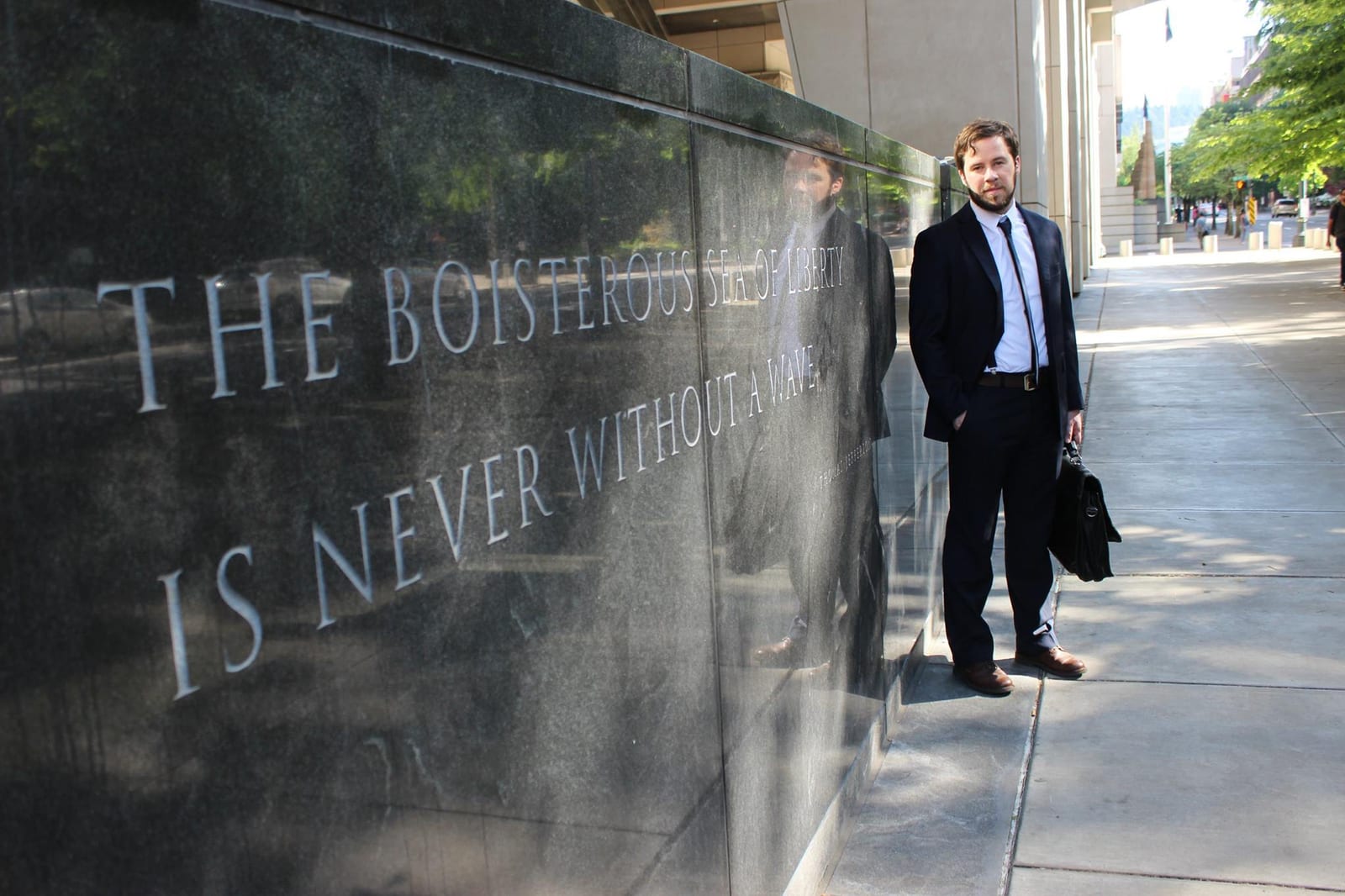
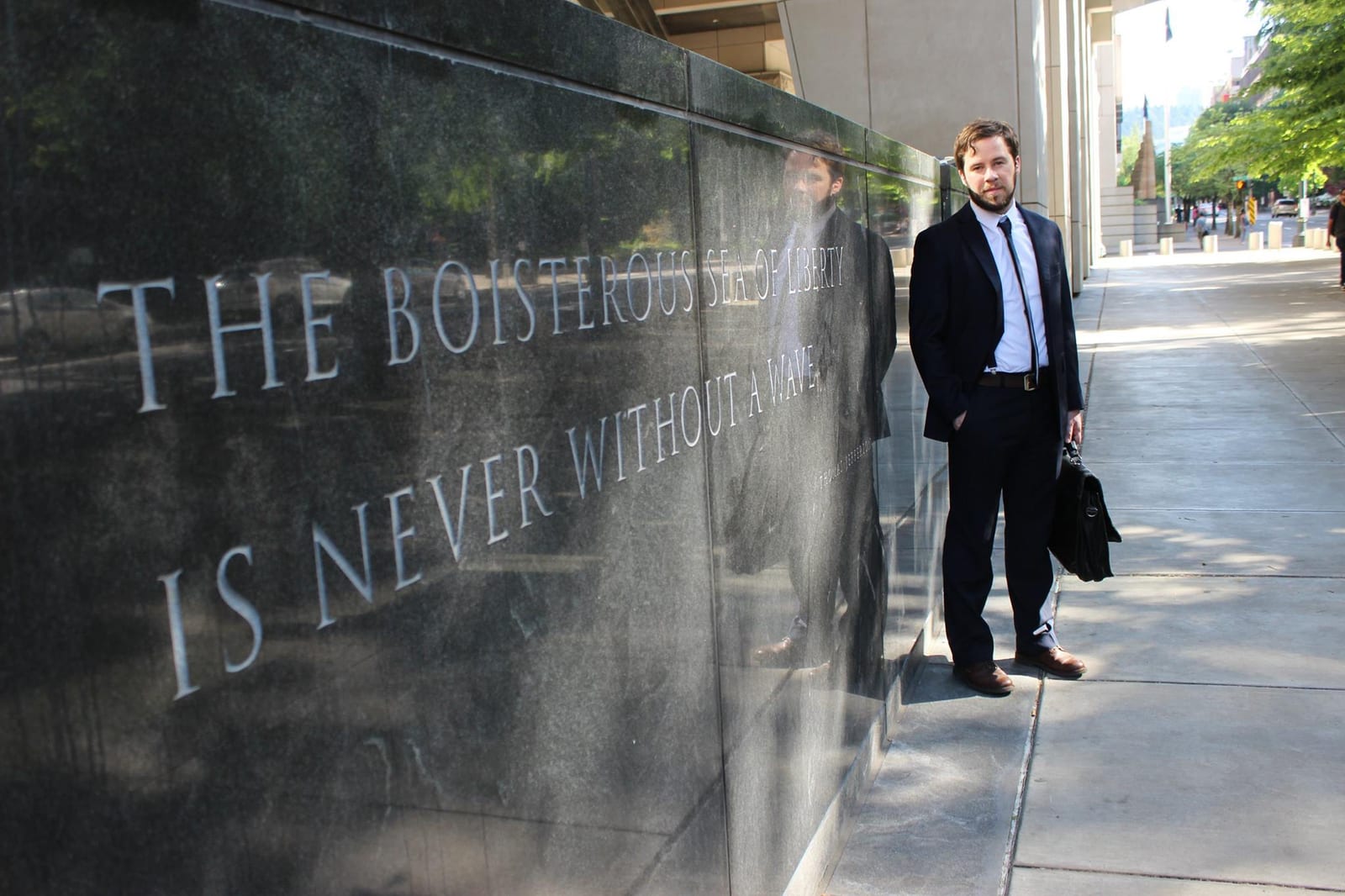
David Wallace outside the Multnomah County Courthouse in Portland, Oregon.
I'm telling you this because I think it matters — not as a confessional, I'm not particularly interested in wallowing in it, but because I think it explains something real about how I practice law and who I fight for.
The Moment That Decided Everything
When I was young and in trouble, I had attorneys. Some were good. Some were not. But what I remember most clearly is not the quality of their legal arguments; it's whether they seemed to actually care what happened to me.
There is a feeling you get when you're sitting in a courtroom facing serious consequences and your attorney is going through the motions. You can tell. The energy in the room tells you. The judge can tell. The jury can tell. When an attorney is genuinely invested, when they're not just processing a case file but fighting for a person, that changes the experience. It changes the outcome.
I remember thinking: if I'm ever in serious trouble again, I want the attorney who has been in trouble before. I want the one who understands what it feels like to sit on the wrong side of a courtroom. I want the one who has something at stake beyond their billing rate.
That thought stayed with me for years. Eventually, it became the reason I went to law school.
Learning the Law From the Inside
Understanding a legal system from the inside, as the person the system is acting upon, gives you a kind of knowledge you cannot learn in a classroom. You understand viscerally how the machinery of justice can be deployed against people who have no power to push back. You understand how a well-meaning judge can still deliver an outcome that destroys a person's life. You understand how procedure, timing, and the competence of your legal representation determine more than the facts do.
This shaped how I think about personal injury cases. Insurance companies are systems. They have departments, procedures, and legal teams. When an injured person, without representation, walks into that system alone, they are outgunned before the conversation begins. The adjuster who calls you within 24 hours of your accident has processed thousands of these calls. They know exactly what questions to ask and what answers to gather. The injured person on the other end is in pain, disoriented, and trying to be cooperative.
That is not a fair fight. My job is to level it.
The Courthouse I Never Wanted to See Again
When I first started practicing criminal defense, I spent time in what I think of as the "cattle-call" courthouse.
You know the scene. The waiting area is full of people who don't want to be there: nervous, exhausted, scared, and some of them angry. Their attorneys sit in separate chairs, past the bar, distanced from their clients in ways that feel both physical and symbolic. The attorneys talk to each other while the clients sit alone. The whole arrangement communicates a message that nobody says out loud: your fate is being determined over there, by people you cannot reach.
I never understood that separation. The most powerful thing you can do for someone in a courtroom is understand their story well enough to tell it to people who need to hear it. You can't understand their story from across the room.
I started sitting with my clients. Not because I thought it was a courtroom tactic, but because it was the right thing to do. The reaction — from clients, from other attorneys, occasionally from judges — made clear that it was unusual. That tells you something about what has become normal.
Personal Injury and the People I Fight For
When I shifted my practice toward personal injury, I carried all of this with me.
The people who call me after a car accident are not asking for legal theory. They're asking for someone who will fight for them against an opponent that has resources, legal teams, and years of experience minimizing what they owe. They're often in pain. They're often missing work. They're often receiving phone calls from adjusters before the adrenaline from the accident has even worn off.
I know what it feels like to be on the wrong side of a system with power. I know what it means to need an advocate who actually shows up for you. I bring that to personal injury cases in a way that I don't think you can fake.
I have had cases where I've gone to the Oregon Supreme Court for a client. I've tried cases where I walked out to a verdict I was proud of, and cases where I walked out to a verdict I wasn't. I have never once thought: "This one isn't worth it."
Rights Restoration and the Second Chance
The rights restoration side of my practice — including expungement, firearm rights restoration, and stalking protective orders — connects to my own history in a way that I don't feel the need to be subtle about.
I got my own record expunged. I went through the process, I know what it means to be on the other side of it, and I know what it actually changes in a person's life when it's done right. A set-aside is not just a legal formality. For the right person, it's the thing that finally allows them to move forward. It lets them apply for the job, get the apartment, and stop carrying the weight of a mistake that no longer defines who they are.
I take these cases seriously because I understand what they mean to the person sitting across from me. Not in an abstract way. In a personal way.
Why I Work the Way I Work
I don't have a downtown law office. I meet clients on Zoom or by phone first. I choose my cases carefully. I am not running a volume practice.
The reason is simple: the attorney who is handling 200 cases simultaneously is not giving the attention your case deserves. I would rather take fewer cases and handle them the way they should be handled — with full knowledge of the facts, full preparation for what the other side will argue, and full commitment to the outcome — than process cases like paperwork.
If you've been injured, or if you have a record you need help addressing, I'm not going to run your matter through a conveyor belt. I'm going to know your case. I'm going to fight your case. That's the practice I built, and it's the only kind I'm interested in running.
Ready to Work With Someone Who Gives a Damn?
David handles personal injury and rights restoration cases throughout Oregon. The consultation is free. There's no fee unless we win on personal injury cases. Call or message directly — he responds personally. 503-208-2950.
David Wallace is a personal injury and rights restoration attorney at Wallace Law Firm, PC in Portland, Oregon. The views expressed in this article are his own.